Subscribe to:
POZ magazine
E-newsletters
Visit:
Forums
POZ TV
POZ Personals
Sign In / Join
Username:
Password:

Pre Exposure Prophylaxis

| 6 Comments
For this post I'm going to comment on an issue that is receiving attention at the moment, and if I'm correct will receive a whole lot more in the coming months. This is pre exposure prophylaxis, now called PrEP.

PrEP is an HIV prevention strategy where uninfected people take antiviral drugs before exposure to the virus to prevent becoming infected. Nobody knows if this will work or if it is safe. Several studies have been underway and more are planned to test this intervention for safety and its efficacy in preventing HIV transmission.

It is important to emphasize that PrEP is not meant to replace more traditional prevention interventions, including the use of condoms and clean needles.

A teleconference on PrEP was held last week. It was organized by CHAMP. Their effort to educate and engage the community is admirable. But the flier promoting the teleconference stated that, as trial results were soon expected, planning for how best to use Prep should now begin. Surely this presents an impression that PrEP is both effective and inevitable. This promotional flier failed to make it clear that PrEP is not intended to replace more traditional prevention strategies. The words condom, safe sex or sterile needles were nowhere to be found.

Of course, the idea of preventing an illness by taking some precautionary action is not new. People with less than 200 CD4 cells take Bactrim to prevent Pneumocystis pneumonia; if we visit an area where there is a risk of getting malaria we take drugs to prevent this from happening. At the recent teleconference PrEP to prevent HIV infection was compared to taking drugs to prevent malaria, and even to the use of suntan lotion to prevent sunburn!

I have to say I was taken aback by this absurd comparison. Malaria is curable.

Seriously, some presenters actually placed sunburn in the same category as HIV infection. Maybe this was just a condescending way of explaining what "prophylaxis" means.

PrEP sounds like a great idea. It is. It would be particularly significant for some women (and men) who may be unable to persuade their male partners to use a condom. The drugs that are being studied for PrEP are tenofovir (Viread) with or without emtricitabine (FTC). Truvada is the combination of these two drugs. All are made by Gilead Sciences, although there is a generic version of tenofovir.

PrEP trials have been conducted or are planned in several African, Asian, and S. American countries as well as the US.

Click on this link to take a look at a list of places where PrEP is being studied or where studies are planned: PReP Trials.

Additional information on PrEP trials is available from the CDC by following this link: CDC PReP Information.

I don't know how many people took part in the teleconference organized by CHAMP last week but there may have been several hundred. Disappointingly, several critical issues concerning efficacy trials of PrEP, and questions about problems encountered in a number of previous PrEP trials remained unaddressed.

What was not mentioned at all in the teleconference was that several PrEP trials in African and Asian countries had been stopped, some by by activists and community groups for a variety of reasons. The reasons include an alleged failure to provide treatment to individuals who became infected, inadequate prevention counselling, and poor laboratory standards. I will add links to fuller information about these and other problems with prior trials a little later in this post.

But not a word about these significant events was heard from the presenters and no questions about them were answered on the call. I did ask for comments on the stopped trials, but received such a totally meaningless response from the moderator that it seemed that he was actually unaware that there had been so many problems with prior PrEP trials.

It is really quite remarkable that a community group did not feel it necessary to tell participants about the concerns of their fellow activists, particularly Act-Up Paris and some Thai groups, regarding PrEP trials.

It's important to say that the concerns are with the trials, not with the principle of PrEP.

The essential problem of trials of the efficacy of PrEP is an ethical one, and it is inescapable. The best known effective prevention means must be provided when a new prevention strategy is being tested. The most recent revision (2008) of the Helsinki Declaration clearly spells this out in guideline 32. This provision was present in previous revisions as well.

This means that in the case of sexual transmission of HIV, condoms must be provided as well as sustained counselling about their consistent use.  In fact, as recognized by the CDC in the information they provide on PrEP, we have to go the extra mile in prevention education and the use of condoms, to ensure that trial participants do not regard PrEP as a substitute for condoms.  In the case of trials among IV drug users, sterile injecting equipment must be provided. This is clearly unlikely to happen:   it is a point on which Thai protesters have been very articulate in relation to PrEP trials.  I will return to this.

It seems quite clear that if we are to meet generally accepted   ethical requirements in conducting a PrEP trial, we will have to do all we can to ensure that condoms are in the possession of participants and that counselling regarding their use is constantly provided.   It is just not enough to say, as previous PrEP trial investigators have , that condoms are available.  

Provision of condoms, if persistent and effective counselling is provided, will probably mean  that there will then not be sufficient seroconversions to be able to measure a protective effect of PrEP.  

A protective effect of PrEP - if there indeed is one, will only be seen if condom usage falls below a certain level, which is something we must make every effort to avoid.    This was a point made by the protesters regarding the Cambodian trial which was stopped.  The investigator's response was entirely inadequate and irrelevant - claiming only that community consultation preceded the trial.

I don't know what this response has to do with the essential conflict of interest that faces the investigators.  The conflict is this.  On the one hand the investigators must do everything possible to ensure that condoms and counselling are provided. They also have an interest in seeing an effect of PrEP, something that will be less likely if the first requirement is diligently met.

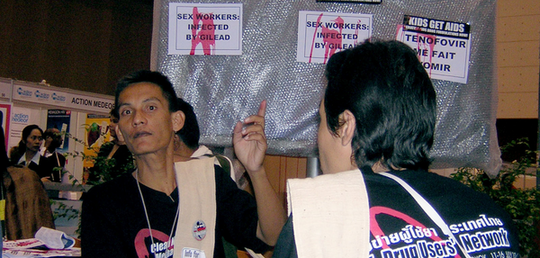
Attention was brought to the stopped Cambodian trial by a rather dramatic demonstration at the International AIDS Conference in Bangkok.
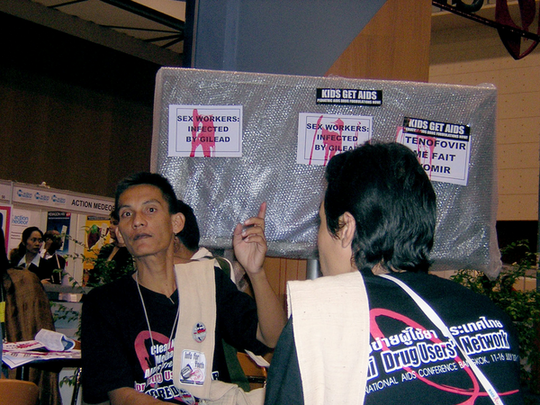
journal.pmed.0020234.g001.png

In the case of drug users, if they were provided with sterile injecting equipment it is pretty obvious that no protective effect of PreP could possibly be seen.

The unhappy responses of the investigators to the protesters can be seen in these two links.

The Abandonded Trials of PreExposure Prophylaxis for HIV: What went wrong?

We Must Not Let Protestors Derail Trials of Pre Exposure Prophylaxis for HIV

You can see that a past president of the International AIDS Society was quite patronizing and almost contemptuous of the protesters.

Here is an extremely articulate response to the above criticisms:

The Tenofovir pre-exposure prophylaxis trial in Thailand: Researchers should show more openness in their engagement with the community

None of this means that PrEP is a bad idea,    On the contrary it may well prove to be a useful strategy.  But there do seem to be insuperable obstacles to testing its efficacy.   

However, safety testing is entirely possible without the ethical burdens presented by efficacy trials. In this case we can provide condoms and constantly encourage their use, and make it absolutely crystal clear that PrEP is no substitute for their use.  If tenofovir or Truvada prove safe there seems to be no reason to withhold it from those individuals who are particularly vulnerable, while of course continuing to advocate for condom use.  Such groups would include women and men who have difficulty in persuading their male partners to use condoms.     

Do we expect uninfected people to respond differently to tenofovir regarding adverse effects?  Probably not.   In Cape Town last month troubling evidence was reported that the bone mass of some African men enrolling for a tenofovir PrEP trial was lower than American standards.  Tenofovir is among the drugs that have an adverse effect on bone mass.

With no proof of efficacy in preventing infection, the risks and benefits of treatment with tenofovir or Truvada   are very different in infected and uninfected individuals.  While both infected and uninfected people would probably experience the same adverse effects, great benefits could only be known to be experienced by HIV infected people.  Uninfected people may or may not receive some protection, but there is a reasonable chance that they would.

Certainly, if condom use by the male partner cannot be relied on, having access to PrEP is absolutely better than doing nothing.   One might ask:  Why not provide people who are particularly vulnerable with  PrEP now?    There is a realistic additional danger.  If a person taking tenofovir as PrEP were to become infected, it is likely that the virus infecting the individual would, if not already resistant to the drug, - most likely would become so.   

Still at the end of the day, if the risks were spelled out it seems to me that it is a choice that should be available to individuals at particular risk, of course with appropriate monitoring for toxicity and infection.

I can well imagine that in some situations, some women -  particularly,  but also some men, might decide that an unproven prevention strategy with all the attendant risks is worth pursuing. This should be a choice for the individual.

There is just one more issue to talk about.  Consistent condom use is a proven prevention strategy. Gay men in the 1980s came up with the idea to use them, and were effective in curbing the epidemic's increase among them at that time.  This was all done without government help and most definitely without armies of behavioral psychologists telling them what to do or not to do. The principle that prevention education and condom use can work is definitely established.

What has not worked so well is perhaps the effort of people entrusted with prevention education.  Indeed every new case is an indication of failure, not of prevention education, but of the lack of it and maybe of the poor quality of the little that exists.

I believe that this is the most important task facing us.  That is a renewed and reinvigorated effort at prevention education.

It is impossible not to note that in at least two areas a technological fix is being looked for.  Of course PrEP is one; the other is the idea that the epidemic could be ended if everybody were tested and all infected people treated.

As always it seems that initiatives that generate profit have a chance of getting off the ground.  Unlike the sale of drugs, there is no money to be made from promoting condom use.

One last comment. 

One of the ways suggested to forestall the problems that have beset so many PrEP trials in the past is a greater degree of community involvement early in the process with a view to obtaining  their commitment to the endeavor and minimizing community criticism. 

 Is this what we are now seeing in the US, as exemplified by the conference organized by CHAMP and others  to come, including one soon to be held by the CDC?

I wonder if the stopped trials of PrEP will be neglected there as well.

6 Comments

Dr. Sonnabend, whose admirable place in the fight against AIDS I acknowledge, seems to be confused about the purpose and context of what is but one aspect of a broad outreach effort.

It's obvious that Dr. Sonnabend spends most of his time in academia. Presenting at grand rounds is a little different from organizing a broad, open, welcoming community call. Simple metaphors are often appropriate. Expecting the email "flyer" to be a treatise on every aspect of the topic at hand is ridiculous.

I'll leave the addressing of factual flaws permeating the piece to others more directly involved. It seems to me, however, that the good doctor is arguing that any biomedical HIV prevention trial is impossible. That's silly.

While I agree that providing sterile injecting equipment is important, I know of no evidence to substantiate the claim that if provided "it is pretty obvious that no protective effect of PreP could possibly be seen."

The fact is that people are fallible - whether we're talking about condoms or syringes. The fact is that excellent condom usage support has been provided in numerous trials. Still there have been infections. Will he trials be small or easy? No, but nobody said they would be.

The vast majority of those on the call were professionals, volunteer providers, and/or community activists. We don't allow one resource to form our opinions. Many of us can actually read. Heck, we even know how to use Google.

The only thing I find "condescending" is Dr. Sonnabend's assumption that we who participated on the call are ignorant and helpless. Nothing could be further from the truth. We've been fighting this disease for years, questioning and thinking for ourselves all along.

Most importantly, we realize that if there is even a chance that PrEP will work, we must mobilize around influencing a) how the research will be done, b) how any resulting intervention will be operationalized, and c) making sure that the complete portfolio of prevention strategy choices are accessible to everyone who needs them.

That means that we don't accept Dr. Sonnabend's pose as some wizard of PrEP - benevolently waving his wand at the populations HE thinks should have access to it if it's proven effective. We'll insist on participating in the process using our own unique intelligence, wisdom, and insight, thank you very much.

I am sorry that Mark Hubbard felt it necessary to mount an ad hominem attack on me. This is a serious issue.
Joseph Sonnabend

I agree with the Dr Sonnabend, i understand there might different points of view about the issue but... we must fight ideas NOT PEOPLE. This is not personal issue you are also talking about the lives of many other people and i hope we can keep all discussions in the highest possible level.

Yes, this is a serious issue. We have one of those trials here in Ecuador, and i have also been worried about ethical issues of these trials. This is something that has to be analysed deeply.

And any data provided from them has to be communicated in an appropiated way cause yes... Prep could help people but we know arvs are not available just like that in all countries... exemple mine. So the few that are available are very expensive and if there is an increase in demand it might affect the prices... and off course big pharma will get rich but i wonder if we will still be able to ensure that medicine really reaches those in need... since we are unable to ensure that simple thing just right now.

Last Sunday, August 23rd, 2009, hundreds of people, including community members, researchers, trial participants, government officials from various agencies, and professionals from various disciplines gathered to examine issues around PrEP.

Sessions from "Preparing for PrEP: A Stakeholder's Dialogue," a nearly day-long meeting, are all available online at http://www.livestream.com/PrEP. [Click on 'on demand' to view sessions.]

As one of the presenters on the recent PrEP teleconference, I would like to respond point by point to some of Dr. Sonnabend's statements.

As others have indicated, the flyer promoting the tele-conference simply said what the tele-conference was going to be about. It did NOT say that PrEP was going to be effective. All of us who presented on the teleconference were, in my view, clearly stipulating that the purpose of the conversation was to start thinking about what would be needed IF it is proven effective.

The reality is that tenofovir and Truvada are already publicly available and will likely move into increased off-label use if the data show that they work for PrEP. It is critical, therefore, that we start talking now about “PrEP readiness" --that is, putting systems in place before PrEP is marketed to make sure that communities can use it safely.

And while the flier may not have specified that “PrEP is not intended to replace more traditional prevention strategies”, I was the first presenter and I did address this point explicitly early in my remarks. For verification, please see point 5:27 minutes into the audio recording of the call available on-line at http://media.champnetwork.org/2009/08-August/2009-08-13.PrEP.call/2009.08.13.preptheword.mp3.

I used sunscreen as an analogy after a great deal of back and forth with our GCM staff and partners in Africa about what analogy would best help people in their communities to see that prophylaxis is actually a very common practice.

We offered the possibilities of comparing it to anti-nausea drugs one takes to prevent motion sickness before travel, anti-malaria drugs, anti-allergy medications taken during hay fever season, contraceptives taken to prevent pregnancy and prophylaxis (like Bactrim) taken by people with compromised immune systems to prevent OIs. They responded that none of these would resonate widely in Kenya and South Africa except for malaria drugs because people don’t have the luxury of ready access to anti-nausea and anti-allergy drugs. Using contraceptives as an example was seen as potentially confusing because it implied that pregnancy is a disease, rather than a condition.

They said that some people would connect with taking drugs to prevent OIs when you are HIV+ -- but that this wasn’t a reality for many people. At http://media.champnetwork.org/2009/08-August/PrEP.Briefing.Aug09.color.pdf, you can see a copy of all the slides used during the teleconfernece. You will see that I did mention anti-malaria and OI prophylaxis on my slide defining prophylaxis and I added sunscreen because our African colleagues agreed that people do apply various substances, including very thin mud solutions, to the skin to prevent sun burn.

Sunscreen was not mentioned here because we were trivializing the consequences of HIV -- but rather because we were trying to make our information as globally relevant as possible. Clearly, however, this analogy offends some North American audiences and we will have to change it. Another lesson in the impossibility of pleasing everyone.

It may also be worth noting that I acknowledged at the beginning of my remarks (please see point 2:40 minutes into the audio recording)that my presentation was going to be unnecessarily basic for many participants. The assignment given to me was to provide a basic introduction to PrEP that assumed no prior knowledge. We design GCM presentations to inform intelligent people who have little, if any, formal education in scientific areas. This is part of our effort to recruit and cultivate HIV/AIDS prevention advocates in civil society. Far from being condescending, we see this as a critically important educational niche and one we work hard to fill well.

Discussion about the previous PrEP trials that were stopped was simply not on the tele-conference agenda. We did not have enough time to discuss all that was on the agenda as it was. At GCM, we would be happy to discuss the history of PrEP trials in a separate teleconference if there is substantial public interest in doing that.

We have written two in-depth case-studies about what caused the PrEP trials in Cambodia and Cameroon to be cancelled and they are available in line at http://www.global-campaign.org/ethics-resources.htm. I had the good fortune of co-authoring the Cambodia report with Sanushka Mudalair and I think Sanushka and I thoroughly explored what went wrong there in terms of communication between researchers and activists.

I agree that this is a very important part of our history. But, for the sake of time and clarity, it is necessary to decide when we are talking about our past and how to learn from it and when we are talking about next steps and how we move forward.

Dr. Sonnabend’s statement that ”[p]rovision of condoms, if persistent and effective counseling is provided, will probably mean that there will then not be sufficient seroconversions to be able to measure a protective effect of PrEP” has, unfortunately, not proven true in microbicide trials. I only wish that persistent and effective counseling were sufficient to cause dramatic decreases in sero-conversion among all populations.

If that were true, then we could render all women able to insist on condom use simply by supplying enough counseling. Unfortunately, the data show that it’s nowhere nearly that simple.

There is substantial literature on this but one particularly cogent fact sheet summarizing available data has been written by the London School of Hygiene and Tropical Medicine and is available at http://www.global-campaign.org/clientfiles/LSHTM-Condom.pdf. It notes that “What this data illustrates is significant increases in condom use often arise following intervention activity, with the greatest increases being in commercial and casual sex. However, there are generally only small increases achieved within steady partnerships. Overall levels of condom use decrease as the degree of intimacy or regularity of the partner increases”.

Anyone who finds this statement confusing can probably get additional clarity by asking the nearest heterosexual woman why heterosexual women can’t always insist on condom use with their steady boyfriends or husbands. In my experience, most women have a LOT to say about this, if asked!

There is much more to be said in response to Dr. Sonnabend’s discussion of risk, prevention tools offered in trials and the ethical dilemmas inherent in prevention trials. The Global Campaign for Microbicides devotes a lot of time and energy to these issues – working to create an effective interface between researchers, research institutions, civil society advocates and communities hosting research trials where negotiation around these issues can take place. I personally learned a lot about the complexities of this while working on the Cambodia PrEP trial paper and would love to discuss it further. But that is another conversation.


Anna Forbes, MSS
Deputy Director
Global Campaign for Microbicides

Hi Joe, I regret to say that I think this post is both poorly informed and hugely unfair. CHAMP and others have been working on issues related to PrEP for a long time and there have been extensive prior discussions and exchanges on listservs including much discussion of the cancelled trials and sharing of reports and videos about what happened. Pronouncing harsh judgment on people based on participating in one conference call is just not a cool thing to do.

Best wishes,
Richard

Leave a comment


Archives


My Favorite Links

Subscribe to Blog

About this Entry

This page contains a single entry by Joseph Sonnabend published on August 20, 2009 2:16 PM.

An Introduction was the previous entry in this blog.

We need more and better HIV prevention education is the next entry in this blog.

Find recent content on the main index or look in the archives to find all content.

Disclaimer

The opinions expressed by the bloggers and by people providing comments are theirs alone. They do not necessarily reflect the opinions of Smart + Strong and/or its employees.

Smart + Strong is not responsible for the accuracy of any of the information contained in the blogs or within any comments posted to the blogs.


© 2012 Smart + Strong. All Rights Reserved. Terms of use and Your privacy