Subscribe to:
POZ magazine E-newsletters
POZ Personals Sign In / Join
Username:
Password:

July 24, 2008

Pilgrim

Yankee Stadium 311A.jpg

I am on the plane returning from vacation. Not really a vacation, more of a pilgrimage- to Yankee Stadium.

To say that I am not religious is akin to saying my immune system has faced some challenges over the past 16 years. The only time I pray is when there are runners in scoring position and Derek Jeter is at the plate.

I grew up in western New York state, a huge fan of the New York Yankees. While I have followed them religiously three decades, it wasn’t until last year that I set foot inside the proverbial house that Ruth built.

They are tearing down the stadium after this year, and no conferences or meetings were scheduled in the greater New York area- so I went to pay my respects to the concrete, steel and grass- haunted and magical.

The trip couldn’t have been better. Two games- two Yankees wins. A visit to Monument Park- where the best-of-best-from-the best are commemorated. The first night, I was up the third deck on the first base line- a great view. The second night started out in these weird ‘alcove’ seats with slightly obstructed views. The usher moved us up in the third inning to seats about 20 rows directly behind home plate. My oh my.

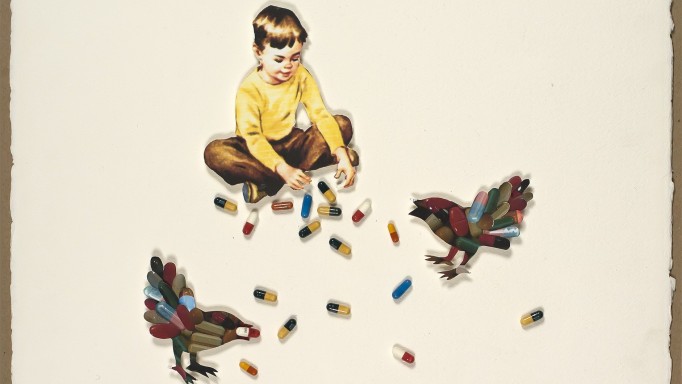
While taking my meds on the plane this morning, I felt an overwhelming sense of gratitude for those compounds soon to be coursing through my veins. HIV meds are a weird community in my life- so much of the time the are about abstract numbers in journals, or meetings with pharma folks or scientists, or conference calls and deadlines. Today, and every day they are personal- without them I would be long gone, likely never to have seen the hallowed ground in the Bronx. With any luck, they will help me see the new stadium next year.

July 17, 2008

Over-stimulated

over-caffeinated-dude.gif

Stop the world! I don’t want to get off, I just want to take a slow, deep breath.

As far as problems go, this is a good one to have. There is just too much to write about. Possible genetic explanation for high rates of HIV infection among people of African ancestry? Senate passing a PEPFAR bill that not only increases funding, but seeks to overturn the draconian travel restrictions aimed at HIVers in the US? Elizabeth Dole lobbying to have Jess Helms’ name attached to an HIV bill? The PAVE trail decision? Genetic resistance to HIV? Oy.

As one of those, ‘both-and people, in an either-or world,’ so I will give my quick takes on each.

Genetic link explains higher rates of HIV among people of African descent.

Researchers working in both Texas and London examined whether a small genetic variation could help explain the higher rates of HIV infection found both in Africa and among people around the world with African ancestry. The thought that a component of red blood cells called a buffy protein might have a role.

This protein has a number of distinct functions, including absorbing a chemokine (chemicals that allow cells of the immune system to communicate with each other), called CCL5. CCL5 also has anti-HIV activity, although it isn’t clear why.

CCL5 used to be a major player is malaria. A form of the parasite, called plasmodium vivax, which used to be very common in sub-Saharan Africa, used CCL5 to gain entry into red blood cells. Therefore people who harbored a genetic variant causing CCL5 to be absent were resistant to infection by plasmodium vivax, which gave them a powerful survival benefit over people who did not have it.

This genetic trait became widespread in Africa. According to the New York Times story on this finding, “More than 90 percent of people in Africa now lack the receptor on their red blood cells, as do about 60 percent of African-Americans.”

The authors propose that this finding might explain the high rates of HIV in both Africa and among, for example African-Americans. Agreeing, Phil Wilson, founder of the Black AIDS Institute, quoted in the San Francisco Chronicle, said “Gay black men do not engage in riskier behavior than gay white men, for example. African people with this gene might have a higher vulnerability.”

The data suggest this is a possibility. The researchers probed a database of African Americans from the US military, and found that people with the CCL5 deletion had 50% higher rates of HIV infection that those without it. Interestingly, they also found that disease progression was somewhat slower in people with the CCL5 deletion.

While this finding is intriguing, it is far from definitive. These findings must be confirmed by others before much can be made of them. Even if confirmed this finding is unlikely to fully explain the disproportionate impact of HIV on Africa and Africans.

PEPFAR

In what is being called a ‘landmark piece of legislation,’ both the House and Senate have passed a bill which would both greatly increase funds for the PEPFAR program- which, among other things bring ARVs to developing countries- and will make it easier for HIVers to both visit and seek residence in the US.

The travel and immigration ban an people living with HIV is draconian, unfair and puts the US in some pretty dubious company, including Iraq, China, Saudi Arabia, Libya, Sudan, Qatar, Brunei, Oman, Moldova, Russia, Armenia, and South Korea.

How could it be that over a quarter of a century into this epidemic, a country which leads the world in HIV science and research can have such a archaic and discriminatory policy? F-E-A-R, or in 12 step parlance False Evidence Appearing Real. As with the Texas spitting case, many folks still remain terrified of people with HIV. Lest we forget, to many we are still diseased pariahs.

Sen. Kerry- yeah that one- introduced an amendment to the PEPFAR bill to reverse this policy, and the Senate passed the modified bill. The House and Senate will conference to resolve the differences between the bills, which Bush has indicated he will sign.

F-U Elizabeth

In what can only be seen as a full frontal attack on people with HIV, Senator Elizabeth Dole is trying to get the late-and-not-great Jesse Helm’s name attached to the above-mentioned PEPFAR bill. As my 15 year old daughter would no doubt say, ‘WTF!”

Jesse Helms was an arch enemy of all people with HIV/AIDS, in the US and around the world. He was an arch reactionary and an unrequited bigot. He literally hated people with HIV. As Peter recounted in his post recently, Helms was more dangerous than a virus.

I should confess I forgot Dole was even a Senator anymore. I won’t soon forget now. Grrrr.

unPAVEd

Rumored for weeks now, the official decision not go forward with the planned PAVE 100 HIV vaccine trial can down the proverbial wire this morning. The PAVE 100 trial was a large efficacy trial of a vaccine developed by the National Institute of Allergy and Infectious Diseases (NIAID)’s Vaccine Research Center.

It was the right decision, which follows and flows from the failure of the Merck vaccine earlier this year. As Martin Delaney wrote about here , the Merck vaccine’s failure was not simply a major set back for that candidate, but for most, or maybe all of the vaccines in development.

The decision was made not to do a large trail, like PAVE 100- as the chances of success were considered too low for the investment in resources, not to mention the risks for the participants. The vaccine’s developers think that their vaccine is ‘different enough’ to merit more research however. They are working on designing a smaller, proof-of-concept trial in place of PAVE 100.

The whole field of HIV vaccine research is floundering right now. It would have been folly to move ahead with a large, expensive trial like PAVE 100 that had little real chance of payoff. The smaller scale study idea might have some merit- we’ll see.

Genes and HIV Resistance

The last story to come across my desk yesterday- thank you Diane- was about research suggesting that a combination of two genetic traits might make some people highly resistant to HIV infection. The genes in question are HLA-B57 and KIR3DL1. A group of Canadian scientists compared the genetic profiles of one group of people who were recently HIV infected to a group of repeatedly exposed, but uninfected people. They found that a particular combination of the two genes was 4.5 times more common in the uninfected group.

KIR3DL1 makes a protein which activates a type of immune system cell called a natural killer cell. HLA-B57 makes a protein that can attach to KIR3DL1, and reduce natural killer cell activity. The theory goes that if HLA-B57 isn’t binding to KIR3DL1, the natural killer cells might retain higher levels of activity and might more effectively combat HIV infection.

If confirmed and expanded by other research this finding has the potential to advance both the treatment and prevention of HIV infection. One of the most vexing problems for both HIV treatment and vaccine research has been the lack of a clear understanding of what kind of immune response is necessary and adequate to prevent and control HIV infection- something called the correlate of immunity. This finding might help in that endeavor.

Deep Breath

Days like this are rare. It will take some time to fully appreciate each of these stories, particularly those that require more research, like the genetics stories. Working in HIV is rarely dull, but today I could have used a little less stimulation.


July 15, 2008

What we need from the next administration

bill-nye.jpg

With apologies (and fawning ‘I am not worthy’ respect) to Bill Nye, at Project Inform, I am the science guy. My daily grind is journals, conferences, clinical trials and advisory boards. I swim in a world of hard data, and I like it that way. As complicated as confidence intervals and statistical power can be, numbers are comfortingly straightforward.

Project Inform is fortunate to have two highly respected and effective public policy experts - Ryan Clary and Anne Donnelley. They are our policy gurus- managing to have both a wonk’s understanding of the nuance of legislation, and an organizer’s skill in forging alliances and building bridges.

I don’t envy Ryan and Anne. There work is much harder than mine. I like my little clean world of molecules, informed consent documents and peer review. Politics makes organic chemistry look like basket weaving 101.

Sometimes though the neat and tidy divisions between treatment advocacy and public policy don’t hold. Public policy influences science and vice versa. So, this presidential election season I have been asked to think about what I, the science guy need from the next administration. Not knowing who will be in the Oval Office, or what the balance of power will be on the Hill, I will focus on the one thing I really, really need from the next administration- no matter who wins in November.

I need an administration that respects science. I need an administration that allows science to speak for itself, and let’s the scientific process run itself with minimal interference from ideologues.

Global warming, fuel prices, world food shortages, and the aging population are a few examples of topics likely to be widely the next few months, and where science should be at the forefront.

While I doubt that HIV/AIDS will get much airtime, the attitude and behaviors of the next administration toward science will impact people living with HIV/AIDS- in the US and world wide. Four areas where this impact might be most felt by our community are the National Institutes of Health, the Food and Drug Administration, stem cell research and needle exchange.

The NIH

The next administration needs to adequately fund science and let scientists drive the research process. The National Institutes of Health houses much of the government’s research efforts aimed at HIV/AIDS. NIH’s Division of Acquired Immune Deficiency Syndrome(DAIDS), headed up by Carl Deiffenbach conducts and funds research ranging from basic science to vaccines to prevention and treatment.

Some argue that HIV/AIDS receives a disproportionate amount of Federal research funding. While it is true that HIV/AIDS receives a large share of research funds, this research helps advance and inform work done in many biomedical and social research areas. For example, to AIDS relatively little research focused on the immune system, leaving our body’s second most complex system largely mysterious. Our understanding of the immune system has grown by leaps and bounds over the past 30 years, driven largely by HIV/AIDS research. This research has benefitted many areas of medicine, from autoimmune disorders to heart disease.

The NIH needs to be a funding priority. Equally important, their research priorities must be driven by science more than politics. In the wake of the World Trade Center attacks, there was a major push toward ‘bioterrorism’ related research. While such research is important, fear should not deflect us from fighting the very real problems we face, including HIV/AIDS.

The FDA

We need an administration that will allow the FDA to work independently, to balance its primary job of ensuring drug safety with the need to develop new and better treatments particularly for serious illnesses.

The Food and Drug Administration (FDA) has suffered some criticism lately over drug safety issues. The primary role of the FDA in regards to pharmaceuticals is to ensure safety. From Fen Phen to Vioxx, there have been times when they have been less than successful. This has led the FDA to become somewhat risk-averse. This is okay, as long as it doesn’t preclude creative approaches to evaluating new drugs.

In recent years, most new HIV drugs have been developed using very similar trail designs. The basic design had worked quite well, and led to the introduction of a number of powerful and well tolerated new HIV drugs. This design is not workable anymore, for a number of reasons.

Project Inform, along with activist coast-to-coast have been meeting with FDA and industry for the past year-plus to tackle this issue head on. Recently, The FDA has shown some openness to new ways of developing HIV drugs. We hope this trend continues.

The FDA has experienced some direct politically motivated interference from the current administration. Most famously when their advisory committee voted to expand access to the birth control measure, Plan B, the White House intervened for political, not scientific reasons. This kind of interference compromises the FDA’s independence and undermines its work. The next administration needs to allow the FDA’s process to work, as free of political considerations as possible.

Stem Cells


One more area we need a new direction from the new administration on is stem cell research. Stem cells hold tremendous promise for many diseases including HIV/AIDS. The current administration has greatly restricted federally funded stem cell research, again for political and not scientific reasons. Federally funded scientists, including those working for or funded by NIH, must be allowed to fully research the life saving and healing potential of stem cells, free of politically based constraints.

The promise of stem cells for HIV was never more evident than this year’s CROI conference. As Project Inform wrote about here , an HIV positive German man received a stem cell transplant due to cancer. A matched donor was found for him who also had an unusual genetic trait that has been shown to make people highly resistant to HIV infection (called the homozygous Delta-32 allele). They wanted to see if the stems cells would take hold in his body and alter the course of his HIV disease.

It did. He was taken off his HIV drugs at the time of the transplant- and had not needed to restart over a year later. His HIV viral load was undetectable by both standard methods and more sensitive, pro-viral DNA- tests. While nobody has said this man is cured, the stem cell transplant seemed to have a significant impact on his HIV disease.

The Federal restrictions on stem cell research have had a chilling effect of the entire field. Some researchers have moved their work to more friendly environments. In some cases, governments- like the State of California- have stepped in to the breech to stimulate stem cell research. As administration that encourages cutting edge science would be ideal; one that doesn’t aggressively thwart it would at least be an improvement.

Needle Exchange

Science doesn’t often lend itself well to bumper stickers, but needle exchange does indeed save lives. By making clean needles available to people who need them, needle exchange programs have been shown to reduce HIV infection rates among needle users and their sexual partners.

With HIV infection rates stubbornly high, proven prevention methods should be supported. Congress and the White House have treated needle exchange like a political hot potato. Federal funds are barred from supporting needle exchange programs in their back yard of Washington, DC- an epicenter of the epidemic. The Bush administration has opposed efforts to expand needle exchange programs both in the US and abroad.

The objections to needle exchange are largely moralistic. If public policy was rooted in science there would be no barriers to needle exchange. Needle exchange programs studied worldwide have been shown to be effective and, contrary to their opponents’ rhetoric not to increase rates of drug use. The next administration must defer to science over narrow views of morality and support needle exchange.

The worlds of science and politics are often quite foreign to each other. Few politicians come from scientific disciplines, and most scientists don’t relish the world of politics. The scientific process works best unfettered from the world of partisan politics. Project Inform looks for a new kind of leadership from the next administration, one that respects science and the scientific process and does not subvert it for political gain.

July 11, 2008

Even Steven

One of the challenges of HIV treatment advocacy is to remain objective, or as much so as possible. Objective means fair. Objective means following the data. Objective means not allowing feelings to overwhelm facts.

Objectivity is an ideal, and as such is unattainable. The point is not to achieve objectivity, but to strive for it. The closer to objective that I stay in my work, the better work I do. Hopefully that work, and that objectivity translate to some tangible gain in our war against HIV/AIDS.

Objectivity can be an elusive quality. This is particularly true when one very much has a ‘dog in the fight.’ Like anyone living with HIV, I am intensely vested in what happens in the research world. I want good drugs to succeed, in part because I need them to.

I am also subject to the ‘wow factor.’ I can be dazzled by data, star-struck by statistics. I am so immersed in the mostly mundane world of incremental improvements, when something sparkles I sit up and take notice. There is a fine line between being duly impressed and going ‘coo-coo for coco puffs.’

As human as anyone, the trick for me is to self correct. I need to always want to pull back the curtain, and expose the man behind it. This might be a good time for some self-correction. I fear that I have been unfair- to a little molecule called maraviroc. Moreover, I think it is due, in part to being bedazzled by another molecule- raltegravir.

A little back story might help. A few years back, there were three CCR5 drugs close together in development- GSK aplaviroc, Schering’s vicriviroc and Pfizer’s maraviroc. Then came the train wreck. First, GSK announced they were halting development of aplaviroc due to rare, but serious liver toxicities. Soon after we heard that a woman in a trail of maraviroc needed a liver transplant (turned out it was not related to maraviroc). Soon after that we learned of higher rates of cancer seen in people taking vicriviroc than placebo in those studies.

Close to this time, we were getting our first real look at raltegravir. Companies had been unsuccessfully trying to develop integrase inhibitors for a long time, and many of us (or at least I) thought that Merck’s program was failing, simply because we hadn’t heard anything for a long time.

Not so much. Merck was sitting very quietly on their data, waiting to share it until just the right time. They went around showing treatment activists their early study results, and they were stunningly good.

Fast forward to 2006, as both maraviroc and raltegravir have clear paths to approval. Both are in phase III- the final phase before approval- and looking pretty good. I had the chance to meet fairly regularly with both companies, both individually and as part of advisory committees or other groups.

There was a subtly different tone between meetings with Merck and Pfizer. With Pfizer, there was much more of a focus on the potential for adverse effects. There was the fear of the drug causing a dangerous shift to X4. There was fear- based on animal studies- that blocking R5 could leave people more susceptible to certain viral infections. And then there was the fear of the unknown- this was after all the first and only HIV treatment that targets a component of the immune system rather than the virus. With Merck, we did talk about side effects, but there was less energy behind it. More focus was put on measures of efficacy, and the continued best-ever study results.

I understand the level of anxiety we had about R5 drugs, like maraviroc. The truth is, so far we haven’t seen the problems that we expected to, or at least worried about. What surprises me is that we weren’t equally fearful of raltegravir, which seems to work inside the nucleus of the cell. I should emphasize, we haven’t seen much in the way of problems with raltegravir.

Overall, I think the net effect was that we- or at least I was unfair to maraviroc. The data on maraviroc aren’t quite as spectacular as raltegravir- but there are what we call confounders (mostly the studies of raltegravir allowed the use of Prezista, where the maraviroc studies didn’t). Both drugs are powerful and well tolerated. The main downside of for maraviroc is the need for an expensive, time consuming test to see if you can even take it.

It is no secret that maraviroc sales have been slow. I don’t think that the community’s anxiety about the drug is to blame- I think it is mostly a lack of clear understanding of its best use. Still, I think that had maraviroc come to market earlier, it would have looked better, and more people would be taking it. It isn’t so much the molecule as when and how it came to market.

For my part, I will strive to do better next time- to be vigilant against the dazzle of data.


July 9, 2008

Deal with the Devil

satan.jpgA couple of weeks ago, I got a tattoo of a punk rock devil on my left forearm. Today, I met with the pharma corporate devil, or at least his lackeys.

Not really. I met today with Abbott- who have, to put it mildly, a poor standing amongst activist folks. Their infamous quadrupling of the price of their protease-inhibitor-turned-booster, Norvir (ritonavir) was a true low-water mark for drug pricing. They have done other things we haven’t liked, but this was the biggie.
The price hike was so egregious that many activists, and more than a few docs, began a boycott of Abbott. This boycott was nearly universally supported at the time, as a show of public disfavor with the community.

As time went on, some questioned the utility of continuing the cold shoulder approach. They argued that Abbott, which also makes Kaletra (lopinavir/ritonavir), was still a major player in HIV and not talking to them was having the unintended consequence of leaving them immune from community input and pressures.

Many remain unconvinced.

Abbott was eventually taken to court over the price hike (and a few other things). In the course of this ongoing trial, internal Abbott documents were made public. These documents confirmed many of the worst perceptions that we had about the company and its decision makers. The case is ongoing.

So, why did I meet with them? I tend to agree that it is most often better to be talking to industry than not. In the absence of ‘street activist’ type movement, face-to-face meetings with pharma are often the only influence we have over their activities.

I also am not convinced that Abbott is much worse, or maybe any worse than their competitors, who I meet with. While you won’t see me jump to their defense, they have plenty of company in the pharma-acting-bad club.

Most importantly perhaps, we have things to talk to them about- particularly their slow-as-molasses development of a heat stable formulation of Norvir. It has been close to 3 years since they gained approval for the meltrex- or heat stable- tablet formulation of Kaletra. A heat stable formulation of Norvir would benefit anyone on a boosted PI, but could make the biggest difference in the developing world, where difficulties maintaining a cold chain have limited the availability of boosted PIs.

Confidentiality agreements prohibit me from sharing much of the content of the meeting- but you aren’t missing much. Nothing stops me however, from me sharing my major piece of advice to them: don’t abandon HIV drug development.

It has become almost fashionable to talk about the dizzying array of options on the HIV pharmacy shelf. While there are over 2 dozen products approved for HIV treatment, far fewer are widely used. Moreover, as I wrote here, the HIV drug pipeline is thin and unimpressive. Our ‘market’- their word, not mine- may appear crowded and competitive- but many of the products are barely used and good molecules tend to rise to the top.

Abbott, their missteps aside- is the kind of company we need in HIV- large enough to handle the vagaries of drug development, with the financial, structural and intellectual resources to make a real difference.

Or maybe not. We have few effective mechanisms to keep companies in check, and Abbott has shown itself capable of seriously bad behavior. They get something out of meeting with us, or they wouldn’t do it. What? A combination of honest counsel from people like me who sit in hotel bars chatting about HIV drugs, and maybe a heads-up on how we might react to decisions they make.

As I type this in O’Hare’s C terminal, my new ink is itching- is it the normal healing process or is it something more? Is my cartoon devil nagging at my conscience, or is it just the histamines?

Hell if I know.

June 27, 2008

My journey with KP-1461

The moment I saw the email, I knew something was amiss. It was from Stephen Becker, MD- the medical director for Koronis Pharmaceuticals, a Seattle-based company developing a new HIV drug. The email was addressed to all of the members of their advisory board, which I am a community member, and implored each of us to speak with Stephen (he hates it when I call him Dr. Becker) the next day.

Emails like this are the industry equivalent of your girlfriend or boyfriend saying, ‘we need to talk,’- often a sign of trouble ahead. It was.

As I wrote about here http://projectinform.org/news/2008/061208.shtml, Becker was letting us know about a stunning setback for their drug- called KP-1461. The short version is laboratory studies called in to question the drug’s viability. Worse still, a look at the results from the ongoing study confirmed these concerns.

Within a few days, the one ongoing study of KP-1461 was halted, I broke the story on our website, and Stephen announced his resignation from Koronis. The future of this product looks bleak at best.

Setbacks are part of the drug development process. The road from discovery to commercialization is indeed fraught with pitfalls, scientific, logistical and economic. In just the past few years, we have seen aplaviroc, T-1249, PL-100, brecanavir and others fail for reasons ranging from formulation problems, to liver toxicity.

Is this just another bump in the road, or something more? I don’t know, but it feels significant to me.

My relationship with KP-1461 goes back to my earliest days working on drug development with Project Inform. I was in the office one day, when Marty walked in. Marty works from home, so there is always a reason when he appears at the office. When I asked him why he was in, he told me to meet with a new pharmaceutical company, and I should sit it the meeting.

We sat in our conference room looking with a couple of folks from this Seattle company, I had never heard of. They had a drug they thought held promise for HIV, which worked in a radically new way. It was the radical new way that caught my attention, and piqued my imagination.

KP-1461 was supposed to work in a very count-intuitive way- by encouraging HIV mutation. All other HIV drugs seek to prevent HIV from mutating- a difficult task for sure, but one crucial to the success of ARVs. This drug turned that on its head and proposed that you could actually mutate HIV to death.

I have seen several names for this approach. Koronis’ website calls it Viral Decay Acceleration. My favorite term is terminal mutigenesis, which I probably like in part because it sounds like a heavy metal band name.

Why in the world would you ever want to encourage HIV to mutate? Doesn’t it do that enough on its own? Isn’t mutation a bad thing?

In the HIV world we do talk about HIV mutation as a bad thing- and it usually is. HIV is very prone to mutation, making it very adaptable to changing environments. This leads many people to think HIV is clever or wily. Not really.

HIV is sloppy, sometimes to its advantage. It reminds me of the story of Dock Ellis. In 1970, Ellis was a starting pitcher for the Pittsburgh Pirates. Unaware that he was scheduled to start against the San Diego Padres later that day, Ellis and his girlfriend took LSD. Ellis learned later in the day that he was the starting pitcher.

Ellis pitched anyway, throwing what would be the defining game of his career. He allowed no hits, while walking 8 batters and hit one batter. In baseball they call this ‘effectively wild.’

HIV is effectively wild. That is, it makes many, many mistakes while replicating. Most of those mistakes are either harmful or neutral. If a person is not taking HIV drugs, the vast majority of mutations go away. When a person is taking HIV drugs, certain mistakes give the virus an advantage- allowing the virus to evade drugs.

We often think of viruses in a science fiction manner, particularly when it comes to mutation. The word itself conjures up images of extra terrestrials and shape shifters, growing ever stronger with each change.

The truth is quite different. Mutation rarely makes a virus stronger. It may provide a survival benefit when one is taking drugs, but is likely to make the virus somewhat weaker on its own. For example, one very common drug resistance associated mutation is called M184V, which often happens when a person is taking either Epivir (3TC) or Emtriva (FTC). While M184V allows HIV to evade these drugs, it also makes it less fit- or able to infect cells and replicate.

(This is why a person might stay on these drugs despite harboring the mutation. If you go off the drug the mutation will sort of go away. It doesn’t fully go away, but it will cease to become the dominant viral strain in the body.)

Koronis sought to exploit the reduction in viral fitness by accelerating the rate of mutation. The goal was to make HIV accumulate so many mutations that it would no long be viable- that is it could no longer infect cells and replicate.

Back to the conference room: Marty and I were meeting with Koronis folks to review their pre-clinical data and their development plan. It is fair to say that both Marty and I were fascinated by this idea. At the same time we saw a rocky road ahead. How would such a drug be studied? In whom? How would it be evaluated? What would the FDA have to say about it? Would people with HIV take such a drug?

The drug went ahead. The FDA had concerns, but saw the drugs potential. I was asked by the company to join their scientific advisory committee, to review the research and advise the company on its plans.

The early research was promising. The drug appeared well tolerated- which is the most important factor in early human research. There were signs that the drug was working, but the research was far too preliminary to know with any certainty.

The company received approval to do a phase II trail in the US, and one in Argentina. The US trail was for treatment experienced people and the Argentine for people taking HIV drugs for the first time. Although it was slow to recruit, the US trial was up and running. The Argentine study faced regulatory hurdles, but was recently approved.

I talked with Stephen the day after I got the ‘we should talk’ email, I expected bad news. I didn’t expect his to say what he did.

He explained that the FDA had asked them to repeat a set of tests called, serial passage experiments where HIV is exposed to varying concentrations of a drug in order to force drug resistance to develop. This is a normal part of the drug development process. The FDA required Koronis to repeat their earlier serial passage experiment, because drug resistance did not emerge in the earlier experiments. The idea was to keep the experiment going until resistance did emerge.

It never emerged, because the experiments showed that the drug was having no affect whatsoever on HIV. They went and looked at the results from the US study, and found little to no evidence that the drug was working. Had the clinical data shown the drug working, it would have likely trumped the lab results.

I am both a activist and a journalist. I sat on the story for a few days to make sure that all of the study participants heard from the study, rather than our website. Once I was confident that the information was publically available, I posted the story to the web.

As quoted in our story, Becker said the company was committed to understanding what went wrong. He estimated it would take 2 months to figure it out.

A week ago today, Stephen sent out an email announcing his resignation from Koronis. I was saddened if not surprised. It casts a pall on the future for this drug- most likely it is DOA.

I don’t know what led him to resign. Whatever led him to leave Koronis, Stephen’s acted in a highly ethical and straightforward manner throughout the process. I hope he doesn’t stray far from HIV, we need folks like him on our side.
Before writing this entry, I went to Koronis’ website, and there is no mention of either the setback of Becker’s resignation. I hope the company does the right thing, invests the resources necessary to figure out what went wrong and continue to follow Stephen’s example of transparency and forthrightness with community.

This setback feels bigger to me than losing aplaviroc or Becker’s last company’s CXCR4 inhibitor. The pipeline is both thin and unimpressive. The mechanism of accelerated viral decay is precisely the kind of thing that could lead to true breakthroughs in treatment. We need this kind of creative thinking to move to the next level in HIV.

June 23, 2008

Farewell to 2 Giants

Today I woke up to learn that two old friends are gone: George Carlin and Cody’s Books. Of course, neither were friends in a strict sense- but I loved them both and they will be missed.

carlin.jpg

I am not really big on comedians in general. I like to laugh and all, but comedy, as a genre, is just not that important to me. George Carlin transcended, or maybe just elevated the medium. The driving force behind his work was a sharp sense of irreverence- speaking the truth to power, especially when it was uncomfortable.

Carlin is most famous of course for his, ‘7 Words You Can Never Say on Television.’ Much will be written on those words in the wake of his death. I want to quote the less famous first words of this piece,

I love words. I thank you for hearing my words. I want to tell you something about words that I think is important. They're my work, they're my play, they're my passion. Words are all we have, really. We have thoughts but thoughts are fluid. then we assign a word to a thought and we're stuck with that word for that thought, so be careful with words. I like to think that the same words that hurt can heal, it is a matter of how you pick them.

I share Carlin’s love for words, his respect for their power, and his indignation at those who would seek to suppress them. I will miss George Carlin.

store.jpg

Cody’s Books was a Bay Area institution. Its flagship store on Telegraph Avenue was the first book store I went to when I moved here. A combination of bad business decision and the flagging market in all things publishing led to its untimely demise.

I played my small part in killing it. The convenience of buying books from by desk has changed my book buying habits. I read as much as I ever have, but spend less time in bookstores.

Shame on me. There is something special about browsing the aisles of a book store- picking up titles, reading the jackets, discovering books you didn’t know existed, walking out the door and in to a coffee shop to start reading. It isn’t hyperbole to say that independent book sellers are vanishing. Cody’s was one of Berkeley’s signature stores, and it is no longer.

Farewell to Cody’s and George Carlin. The world or words is worse off without you. I am worse off without you.


June 20, 2008

Activism Was the First Anti-Viral

Last night, Project Inform held our first of two events to honor our founder, Martin Delaney. An east coast celebration will be held in Washington, DC next week: http://www.projectinform.org/support/fre.shtml

While dress up events are not exactly my cup of tea (I feel like an impostor when ever I wear a suit), I was both moved and inspired last night. The speakers: Project Inform’s Executive Director, Dana Van Gorder; the founder of W.O.R.L.D. (Women Organized to Respond to Life Threatening Diseases), Rebecca Denison; Marty’s long time friend Bohdan Zachary; Brenda Lein, PI’s former Director of Information and Advocacy; Tony Fauci of DAAIDS, and Marty himself- sounded similar themes of activism in the face of indifference and hope in the face of despair.

Mistakenly, I often think of the days before anti-retrovirals as intractably bleak. People were sick and dying, and there were few tools to work with. The one tool that was there was action. Activism was, in an important and often overlooked way, the first anti-viral.

In their own ways, each speaker talked about the importance of activism, and the role that Marty played in creating and sustaining the AIDS movement. Rebecca talked about receiving Project Inform materials within a few days of her diagnosis, saying those pieces of paper literally saved her life. Bohdan spoke of the underground Compound Q trails that PI was instrumental in (as well as Marty’s role as matchmaker). Brenda- who worked so closely with Marty for so long- pointed to the quality of the people who were inspired to work with and at Project Inform- people like Jesse Dobson and Ben Cheng. Fauci thanked Marty for his candor and sage advice through the years.

For his part, Marty demurred. He spoke of himself as a symbol, representing the work of countless people, many of whom succumbed to HIV/AIDS and many others who survived. He said he was particularly proud of the people like Brenda and Jesse, but also Judy Leahy (my old boss at PI) and Anne Donnelly (one of our policy gurus) who grew at Project Inform to become true leading lights in the fight against this disease.

Two things really stuck with me from last night: the emotional heaviness of the early days of the epidemic and the fighting spirit that grew from it. Several of the speakers were close to tears as they recalled losing literally hundreds of loved ones to HIV. What grew from that despair- as well as the inaction, and outright hostility of the government- was a movement that wouldn’t accept the idea that nothing could be done. Brenda summed that spirit up with her typically mater-of-fact eloquence marveling at Marty’s unwillingness to be thwarted by obstacle: if there was no funding, it had to be found, if there was no political will, it needed to be created…

I have said in this space before that I owe my life to Marty and all of the activists that came before me. The debt of gratitude I owe them helps fuel my work. Their radical idea that non-scientists could not only understand, but also influence and even lead science paved the way for this poor-science-student-college-drop-out to build a career around science and activism.

At the end of her talk, Rebecca spoke directly to Marty and implored him not to go too far away from AIDS. I have no fear that he will. While he has more than earned the right to rest on his laurels and enjoy a quiet and more comfortable life- he won’t. He speaks very little to me about his accomplishments. Rather he talks of the urgent work ahead of us all- from tackling the growing crisis in drug pricing, to ensuring world wide access to HIV drugs, to improving our use of available HIV drugs, to spurring new drug development to pushing for an outright cure.

I hope one day I will retire from HIV work, but only because the work will be done. If and when that day comes, the day when we have eradicated this scourge from our planet, I will raise a toast to Marty, and Brenda, and Rebeca, and Anne, and Tony, and Jesse, and Ben, and Ryan, and Judy and everyone else who played their role, big or small in combating and triumphing over HIV/AIDS.

June 18, 2008

Past history argues against predicting the future.

pleonasm.jpgI am a bit of a language curmudgeon. My father was an English teacher, and one of our family pastimes was- and is- correcting each other’s grammar and diction. I also had a series of effective English teachers, especially Alex Desantis and Mike Lasser.

My propensity toward both sesquipedalianism and grammarian priggishness have served me well professionally, if not always personally. In my work, it helps to be able to read the articles we write at Project Inform, with a critical eye aimed both at form and content. In my non-work life, I must remain hyper-vigilant against my instinct to correct.

One linguistic tendency that get’s my hackles up is pleonasms, or common redundant phrases. On the wall near my computer is an invaluable sheet of paper called, ‘Dog Puppies,’ listing 240 such wastes-of-letters, ranging from ‘a bolt of lightning’ to ‘young lad.’ Some that I really detest are ‘past history’ (what other kind is there?) and ‘predicting the future’ (as opposed to the past?).

AIDS of course has it’s own set of pleonasms: HIV virus (Human Immunodeficiency Virus virus), Full Blown AIDS (is there a half blown type I don’t know about?), Greedy Drug Companies- ok I digress.

Acting high and mighty often leads to a harder fall. Quickly scanning the ‘Dog Puppies’ list reveals more than a handful of things I say regularly. It is the old cliché: those who live in linguistic glass houses would do well to refrain from throwing stones.

If you start out to completely eradicate already existing false pretenses, the exact opposite might possibly recur again.


June 17, 2008

World Wide Wonderment

World Wide Wonderment

TJ was my first Gay friend. Well- TJ never said he was Gay, and I never gave it any thought. After all we were friends up through 4th grade, when he left my school. I won’t go in to why, in retrospect I imagined that he was Gay (nothing untoward, just a bit to 1970s campy to be recalled), but it came as absolutely no surprise to me when I found him online recently- on one of those pain-in-the-virtual-ass (anti-) social networking sites.

That ubiquitous set of tubes we call the World Wide Web is really good for finding people you have lost track of over the years. TJ is one of those folks. We were really close friends, he left my school and we never really crossed paths again.

Boy did we come close thought. First off, he graduated from the high school less than a mile up the road from my house- even becoming friends with an ex of mine. Then he spent years here in San Francisco- at the same time I was here, albeit living a more hard scrabbled life than me.

Well, I tracked him down online and even signed up for the site just to reach out to him. His first reaction: HOLY CRAP! Then we got down to sharing stories. His is interesting- graduated high school, went to college, tried living in NYC, spent time in SF homeless and reaping the sexual benefits of being young, and blonde in SF.

He also got HIV when he came home back east and was in a monogamous relationship. Funny how that can happen sometimes.

It is weird to find out an old friend has HIV. Of course, I never want anyone to deal with this stupid virus. It sucks. But, I confess I felt an instant and strong connection to him because of it. I found another friend of mine on the same site, someone I spent more of my childhood hanging out with, but as adults we don’t have that much to talk about. TJ and I do.

I will get back to ‘content’ blogging in short order. There are some really interesting things happening in the world of HIV, and I will spend some time going over them. In the meantime, if you care to read a kind of glum assessment of the state of things check out the following link.
http://www.projectinform.org/news/2008/061608.shtml


Powered by
Movable Type 3.33

© 2008 Smart + Strong. All Rights Reserved.   terms of use and your privacy